


Tile Explorer - Triple Match
4.912.53K Reviews
App Specs
- Version
- 1.97.0
- Updated On
- License
- Free
- Downloads
- 100,000,000+
- Developer
- Oakever Games
- Categories
- Puzzle
- Platform
- Android, iOS
Screenshots
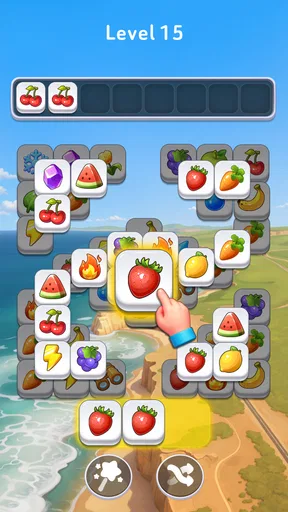

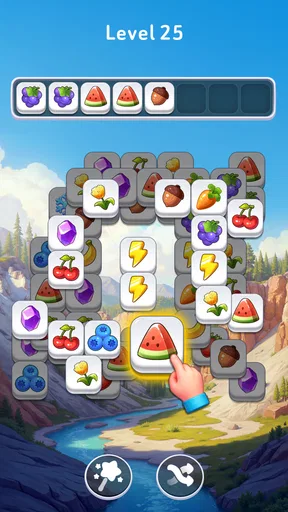
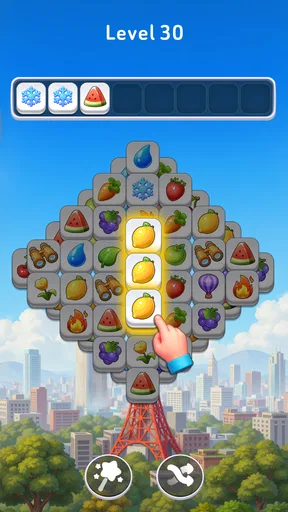

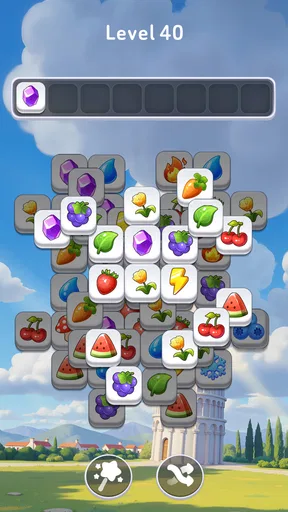


 Analysis by AppCompare
I reach for Tile Explorer - Triple Match when I want a puzzle that gets going quickly rather than one that asks me to learn a long rulebook. Its basic idea is easy to grasp: identify matching tiles and make groups of three. The appeal is in the attention that takes. A board can look obvious at first, then a less visible match or an awkward choice makes me slow down and think. That quick shift from “I know what to do” to “I should check this first” is what gives the game its pull.
A quick puzzle with a real decision behind it
Tile-matching games are often at their best when their rules stay out of the way and the choices do the work. That is the kind of experience I get here. I can understand the aim almost immediately, but I still have to scan the available tiles, notice repeated designs, and decide which match to pursue. The pleasure is modest and direct: spot a useful combination, make the match, and see the board change.
That makes it a natural fit for short breaks. If I have a few minutes before leaving home or while waiting for something to finish, I can start without preparing for a complicated session. It also works when I want a calmer activity than a fast-action game. The challenge comes from looking carefully and choosing, not from needing quick reactions.
Guides and Analysis on Tile Explorer - Triple Match
The trade-off is that this is a familiar puzzle format. Anyone who already plays several triple-match games may recognize the central loop straight away. The game’s value depends on whether its level layouts and gradual challenge keep that loop interesting for you. I find the appeal less about learning a radically new system and more about settling into a clear, repeatable mental task.
How the rhythm fits into an ordinary day
A useful way to play is to treat each board as a small attention exercise, not as something that must be rushed. I look across the tiles before making a move, especially when multiple matches seem possible. Taking that moment to compare options can help me avoid clearing an easy match without considering whether it blocks a more useful one. That simple habit makes the puzzle feel more deliberate without turning a casual game into homework.
For example, I might open it during a short wait, finish a bit of play, then put my phone away when the wait is over. The game’s easy-to-understand objective suits that kind of stop-and-start day better than a puzzle that needs a long uninterrupted stretch just to remember its rules. The listing describes progress as saving so you can return where you left off, which is helpful for this use case; I would still avoid assuming that every interruption or device change behaves identically.
What kind of puzzle player will enjoy it?
I’d recommend it to someone who likes visual matching, wants a low-friction way to fill spare moments, or enjoys making small choices without the pressure of a timer-driven action game. It may also suit a player who wants a familiar format that becomes more demanding as boards grow trickier. Oakever Games is the developer, and the game is listed as free to play, with optional in-app purchases priced from $0.99 to $44.99 per item. I would try the free experience first and decide for myself whether any paid option adds enough value to justify spending.
Worth Reading Before You Choose

Google Calendar Makes a Crowded Week Easier to Manage

Ludo King Makes the Most of the Minutes Between Plans

Baby Panda World Brings Quick Play to Modern Phones, but Its Game Library Feels Busy

ESPN’s Live Game View Makes Following Close Games Easier

QuizzLand Review: A Good Fit for Short Trivia Breaks, Not Every Player

Basketball Stars: Multiplayer Is Fast, but Can It Recover When Matches Go Wrong?
It is less suitable if you need a deep narrative, a strong sense of competition, or a puzzle system that constantly introduces unusual mechanics. It is also not my first pick when I want a game that rewards rapid reflexes or active multiplayer play. The broad appeal is its accessibility, not a promise that every type of player will find endless novelty in matching tiles.
Unpacking the Gameplay
At its core, Tile Explorer - Triple Match is about finding and matching three identical tiles. Sounds simple, right? But don't let the straightforward concept fool you. The game ramps up the challenge with a variety of tile designs and layouts that require sharp observation and quick thinking. As you progress, the levels become increasingly complex, demanding more strategic planning to clear the board.
What I love about this game is its ability to keep you on your toes. Just when you think you’ve mastered a level, a new twist is thrown your way. This keeps the game fresh and engaging, preventing that dreaded monotony that can plague other puzzle games.
Visuals and Design
The visuals in Tile Explorer are vibrant and inviting. The developers have done an excellent job creating a visually appealing interface that’s not only easy on the eyes but also enhances the gameplay experience. The tiles are beautifully crafted, each with distinct and colorful designs that pop out from the screen. It’s these little details that make the game not just a challenge, but a delight to play.
Those colorful designs do practical work, not just decorative work: they give the eye clear shapes to search for as the board gets busier. I find it useful to scan in passes rather than stare at the whole screen at once. First I notice the most repeated patterns, then I check whether a possible group is easy to access, and only then do I commit. That approach is especially useful when several similar tiles compete for attention. A bright appearance can still become visually busy, though, so players who prefer spare, minimalist boards may find the look more lively than relaxing.
Session length, interruptions, and replay value
One practical question with any casual puzzle is whether it feels worthwhile when you can only play briefly. For me, the straightforward matching goal gives each visit a clear purpose: I can focus on the board in front of me rather than spend the first few minutes recalling a complicated chain of rules. That is a better fit for a commute break or a quiet moment between chores than a game whose enjoyment depends on building a long uninterrupted run.
The other side of that convenience is that short-session design does not automatically make every interruption painless. If I put the phone down mid-board, I still need to remember what I was weighing up when I return. Before stopping, I try to leave the current layout in a state I can read at a glance, rather than tapping hurriedly just to end on a move. The progress-saving description makes returning easier in principle, but I would not treat it as a reason to ignore the normal possibility of an app being closed or a session being interrupted.
Replay value comes from the next layout and the small decisions it asks for, rather than from a story I need to follow. That is a strength when I want a repeatable diversion, and a weakness when I am searching for a game that changes its entire feel over time. Compared with word puzzles, which lean on vocabulary, or number puzzles, which reward calculation, this one exercises visual search and planning. If those are the skills I want to use, the familiar format is a plus; if I want a different kind of mental challenge, another puzzle style will be a better choice.
What to know before installing
The game is in the puzzle category, is rated for Everyone, and is free to download. It has a 4.9 average from around 1.4 million ratings, with about 6,800 written reviews and over 100 million installs. Those figures suggest that many players have found the format approachable, but popularity alone cannot tell me whether its pace or visual style suits my own habits. It was released on May 17, 2024, and version 1.68.0 requires Android 7.0 or later. I would check that requirement against my device before installing, especially if I use an older phone.
For a casual player, the important spending question is not simply whether purchases exist, but whether the free play already provides the kind of session they want. Optional purchases range from $0.99 to $44.99 per item, so I would be mindful of the purchase prompts and avoid paying just because I felt impatient with a difficult board. If I am choosing a game for a child, the Everyone age rating is reassuring as a starting point, but I would still make purchase settings clear and supervise spending on the device where appropriate.
When I would choose something else
Tile Explorer is a sensible pick when I want quick-to-understand matching, a colorful board, and room to make careful choices at my own pace. I would skip it if repeating a core mechanic quickly wears thin for me, or if I want a puzzle with a more distinctive logic system. Someone who likes arranging pieces spatially may prefer a block puzzle; someone who wants a sustained deduction problem may get more from a number or word game. Those alternatives ask for different kinds of attention, so the best choice depends on whether I want visual scanning and matching or a more deliberate, rule-heavy challenge.
I also would not describe this as a substitute for every kind of downtime. It gives me a small, self-contained task, not a story to sink into or a social activity to share. That can be exactly right when I want a few minutes of focus, but it means the game is less compelling as my only mobile game if I expect variety across moods. I would keep it as a casual option alongside something with a different pace rather than expect one matching game to cover every occasion.
Why You’ll Love It
One of the standout features of Tile Explorer is its accessibility. Whether you’re a seasoned puzzle aficionado or a casual gamer looking for a quick mental workout, this game caters to all skill levels. It’s perfect for those moments when you need a quick break or a longer session to unwind. Plus, the intuitive controls make it easy to pick up and play, even if you’ve never tried a tile-matching game before.
Another aspect worth mentioning is the game’s ability to save your progress seamlessly. You can pick up right where you left off, making it convenient for those in-between moments during your day.
My casual verdict
In a sea of puzzle games, Tile Explorer - Triple Match stands out with its engaging gameplay, stunning visuals, and user-friendly design. It's a game that respects your time and challenges your mind, all while providing a visually pleasing experience. Whether you’re looking to kill time or seeking a new game to test your puzzle-solving skills, Tile Explorer is definitely worth checking out. Don’t just take my word for it—download it and see for yourself. Who knows, it might just become your new favorite game!
Pros
- Engaging and addictive gameplay.
- Simple controls for easy navigation.
- Visually appealing tile designs.
- Regular updates with new levels.
- Multiplayer mode adds excitement.
Cons
- Contains in-app purchases.
- Frequent ads can be distracting.
- Requires stable internet connection.
- Limited offline functionality.
- Occasional performance lags.
FAQs for Tile Explorer - Triple Match
What is Tile Explorer - Triple Match?
Tile Explorer - Triple Match is a puzzle game where players match three identical tiles to clear the board. It combines strategic thinking with engaging visuals, offering levels that increase in complexity. The game is designed for both casual players and those seeking a challenge, making it suitable for a wide audience.
Is Tile Explorer - Triple Match free to play?
Yes, Tile Explorer - Triple Match is free to download and play. However, it offers in-app purchases for players who wish to enhance their gaming experience. These purchases can range from additional lives to special power-ups. Players can enjoy the game without spending money, but purchases can offer advantages.
What are the main features of Tile Explorer - Triple Match?
The game features a variety of levels with increasing difficulty, vibrant graphics, and intuitive controls. It also includes daily challenges, rewards, and achievements to keep players engaged. Additionally, players can compete with friends or other players on the leaderboard, adding a competitive edge to the experience.
Is an internet connection required to play?
Tile Explorer - Triple Match can be played offline, which means you can enjoy the game without an internet connection. However, an internet connection is necessary for features like updates, leaderboards, and in-app purchases. Playing offline allows you to enjoy the game anywhere, anytime.
What devices are compatible with Tile Explorer - Triple Match?
Tile Explorer - Triple Match is available on both Android and iOS devices. It is optimized for smartphones and tablets, ensuring smooth gameplay across various screen sizes. To ensure the best experience, it's recommended to have a device with updated software and sufficient storage space.


